Çfarë është HPL: materiali dhe standardi EN 438
HPL është letër dhe rrëshira, të shtypura nën ≥120 °C dhe ≥5 MPa. Nëntë pjesët e EN 438, kodet HGS, CGF dhe EDF, ndryshimi me CPL dhe melaminën, përpunimi dhe të dhënat.
HPL nuk është markë dhe as trashësi — përcaktohet nga procesi: ≥ 120 °C dhe ≥ 5 MPa. Ja çfarë fshihet pas shkronjave HGS, CGF dhe EDF, ku qëndron kufiri me CPL dhe panelin e melaminuar, dhe si lexohet fleta teknike.
Plani i kuzhinës, tavolina në laboratorin e shkollës, ndarja midis kabinave në tualetin e aeroportit, veshja në vagonin e trenit, fasada e kopshtit përballë — pothuajse çdo ditë prekni HPL-në, pa e quajtur kështu. Është kudo pikërisht sepse nuk bie në sy.
Ky artikull flet për materialin, jo për një produkt konkret; HPL-ja si fytyrë e panelit për dyer hyrëse është trajtuar në artikullin për panelin HPL. Këtu e kalojmë ashtu siç e shohin prodhuesi dhe standardi: shkronjat në kod, kufiri midis HPL-së, CPL-së dhe pllakës së melaminuar, pse një pllakë e veshur vetëm nga njëra anë përkulet dhe cili HPL përkulet në vend që të plasaritet.
Çfarë do të thotë emri
HPL është shkurtim i High Pressure Laminate — laminat me presion të lartë. Nuk është markë: Formica, Resopal, Abet, Fundermax, Polyrey dhe Trespa janë marka, HPL-ja është materiali që ato prodhojnë. Te ne quhet edhe „kompakt“, por kompakti është vetëm një nga variantet e realizimit.
Përkufizimi qëndron në EN 438-1 (ekuivalenti ndërkombëtar ISO 4586) dhe përsëritet fjalë për fjalë në fletën e të dhënave të produktit të ICDLI: fletë prej shtrese dekorative sipërfaqësore dhe shtresash bërthame, të lidhura përmes një procesi me presion të lartë, me vlera tipike temperature ≥ 120 °C dhe presioni ≥ 5 MPa. Vini re çfarë e përcakton materialin — jo lloji, jo trashësia, jo çmimi, por procesi.
Lëndët e para janë tri lloje letre dhe dy rrëshira:
- Letër kraft, 80–300 g/m² — thithëse dhe e pazbardhur; ajo është bërthama dhe jep trashësinë.
- Letër dekorative, 50–160 g/m² — e zbardhur dhe e pigmentuar, njëngjyrëshe ose e printuar.
- Overlay, 15–80 g/m² — letër transparente me thithje të lartë, detyra e vetme e së cilës është rezistenca ndaj konsumimit.
- Rrëshirë fenolike për bërthamën dhe rrëshirë melaminike për fytyrën.
Ndarja në dy rrëshira nuk është hir. Rrëshira melaminike jep një fytyrë të fortë, pa ngjyrë dhe të qëndrueshme ndaj dritës, por është e shtrenjtë dhe e brishtë në shtresë të trashë; fenolike është e fortë dhe e lirë, por kafe në ngjyrë dhe errësohet nën dritë. Për këtë arsye njëra shkon sipër, ndërsa tjetra — brenda. Prerja kafe e errët e kompaktit është pikërisht kjo rrëshirë fenolike.
Si prodhohet
Letrat zhvillohen nga rulot, zhyten në një vaskë rrëshire dhe thahen — rezultati është letër e thatë, në të cilën rrëshira mbetet ende e aftë të reagojë. Paketa rregullohet në një ambient pa pluhur (overlay, dekor, aq shtresa kraft sa kërkon trashësia, dhe ana e pasme) dhe futet në një shtypës shumëkatësh.
Punojnë shtypëse me deri 45 hapësira, secila me deri 24 laminate njëanshme (0,5–1,9 mm) ose të paktën një fletë kompakte (2–20 mm). Shtypësi mbyllet i ftohtë, ngarkohet me 5–8 MPa dhe nxehet mbi 120 °C, ndërsa cikli arrin 100 minuta. Disa fabrika shkojnë edhe më lart — deri në 9 MPa në 140–150 °C për 40–50 minuta; 5 MPa dhe 120 °C janë pragu i standardit, jo pika e punës. Rrëshirat lëngëzohen, mbushin hapësirën midis fibrave dhe formojnë lidhje të pakthyeshme, ndërsa fibrat mbeten si armaturë. Detaj i rëndësishëm: ftohja bëhet nën presion, në mënyrë që tensionet e brendshme të çlirohen para nxjerrjes.
Pas kësaj fletët priten sipas përmasave, ndërsa ato njëfaqëshe shlifohen në pjesën e pasme — pikërisht prej andej vjen ajo shpina kafe e vrazhdë, e cila nuk është defekt, por sipërfaqe ngjitëse. Struktura e faqes — e shndritshme, mat, poro druri — nuk vendoset shtesë: ajo është një gjurmë e pllakës së presës e mbetur në rrëshirën e lëngshme. Prandaj dekori dhe struktura porositen veç e veç.
HPL, CPL dhe pllaka melaminike
Këtu humbasin më shumë para gjatë ofertave: të tria produktet duken njësoj nga larg, por kanë kosto krejt të ndryshme.
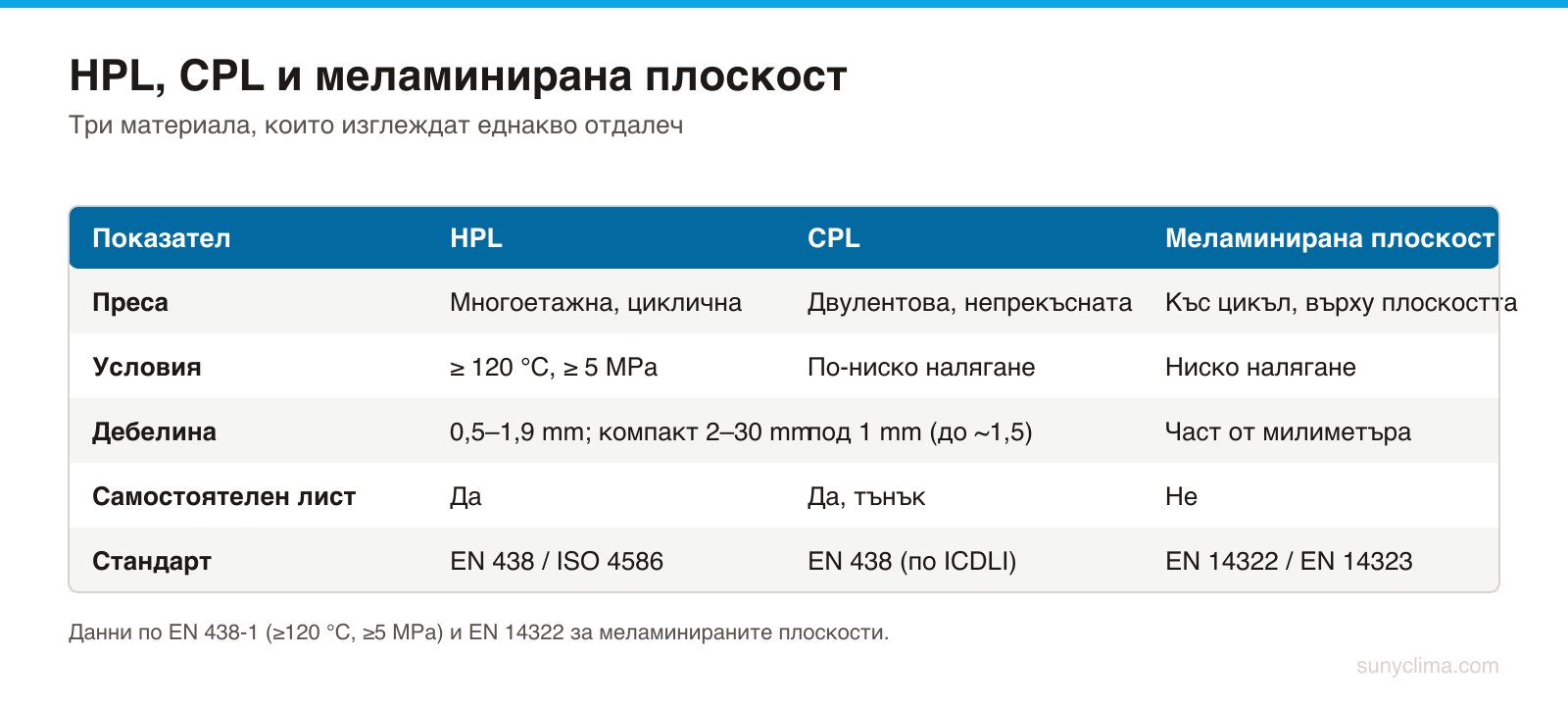
HPL është një fletë e pavarur — mund ta merrni në dorë dhe ta prisni vetë. Ekziston e pavarur nga baza, ndërsa në versionin kompakt nuk ka fare bazë.
CPL (Continuous Pressure Laminate) është gjithashtu një fletë e pavarur, por prodhohet nga një makinë tjetër — një presë e vazhdueshme me dy shirita, ku shirita letre të impregnuar kalojnë mes dy brezave çeliku me shpejtësi 8–25 m/min, nën presion më të ulët dhe me trashësi shumë më të vogël: zakonisht nën 1 mm, sipas disa burimeve deri në rreth 1,5 mm. Është më i lirë dhe pothuajse gjithmonë ngjitet në të gjithë sipërfaqen. Organizata e industrisë ICDLI e quan edhe këtë HPL — cilësia përcaktohet nga EN 438 dhe ISO 4586, jo nga makina përdorur.
Pllaka melaminike (MDF ose ngjitëse druri me shtresë melaminike) nuk përmban fletë të pavarur: letra dekorative e impregnuar ngurtësohet direkt mbi pllakë në një presë me cikël të shkurtër dhe shtresa bëhet pjesë e vetë milimetrit të materialit. Përshkruhet nga EN 14322 dhe EN 14323, jo nga EN 438. Është material legjitim për mobilim të brendshëm — por aty ku HPL përballon një goditje, pllaka melaminike copëzohet dhe poshtë shfaqet ngjitësja e drurit.
Rregulli praktik kur lexoni një ofertë: pyesni sipas cilit standard është deklaruar materiali i faqes. EN 438 do të thotë HPL, EN 14322 do të thotë pllakë melaminike.
Familja EN 438: nëntë pjesë
EN 438 nuk është një dokument i vetëm, por një seri, ku çdo pjesë mbulon një produkt të ndryshëm me kërkesa të ndryshme. Prandaj fraza "përputhet me EN 438" nuk do të thotë asgjë, përderisa nuk specifikohet cila pjesë saktësisht.
- EN 438-1 — hyrje dhe përkufizime; këtu gjendet definicioni i HPL.
- EN 438-2 — metodat e testimit; çdo numër në një fletë teknike i referohet një pike prej këtej.
- EN 438-3 — laminate nën 2 mm për ngjitje mbi bazë mbajtëse.
- EN 438-4 — kompakt 2 mm e më shumë për përdorim të brendshëm, standard dhe rezistent ndaj zjarrit.
- EN 438-5 — laminate për dysheme, nën 2 mm.
- EN 438-6 — kompakt për përdorim të jashtëm, 2 mm e më shumë, me dy nivele: kushte të moderuara dhe të rënda.
- EN 438-7 — panele kompakte dhe kompozite për veshje muresh dhe tavanesh, përfshirë tavane të varura; botimi i vitit 2005 mbetet në fuqi, ndërsa projekti për një version të ri u tërhoq.
- EN 438-8 — laminate dizajni: efekt perle, furnir, sipërfaqe metalike.
- EN 438-9 — laminate me bërthama jashtë kategorive të tjera, si p.sh. me ngjyrë ose të përforcuara me metal.
Pjesët 1 dhe 3–6 janë nga viti 2016, pjesa 2 mban ndryshimin A1:2018, pjesa 9 është nga viti 2017, pjesa 8 — nga viti 2018. Rishikimi i vitit 2016 shihet edhe sot në fletët: te rezistenca ndaj konsumimit mbeti vetëm pika fillestare (IP) si kriter, testimi i nxehtësisë së thatë ra nga 180 në 160 °C, djegiet nga cigaret u hoqën dhe në vend të tyre erdhi një metodë për mikrogërvishtje.
Si lexohet shenjimi
Kodet HGS, VGF, CGS ose EDF nuk janë numra artikulli — çdo shkronjë mbart informacion.
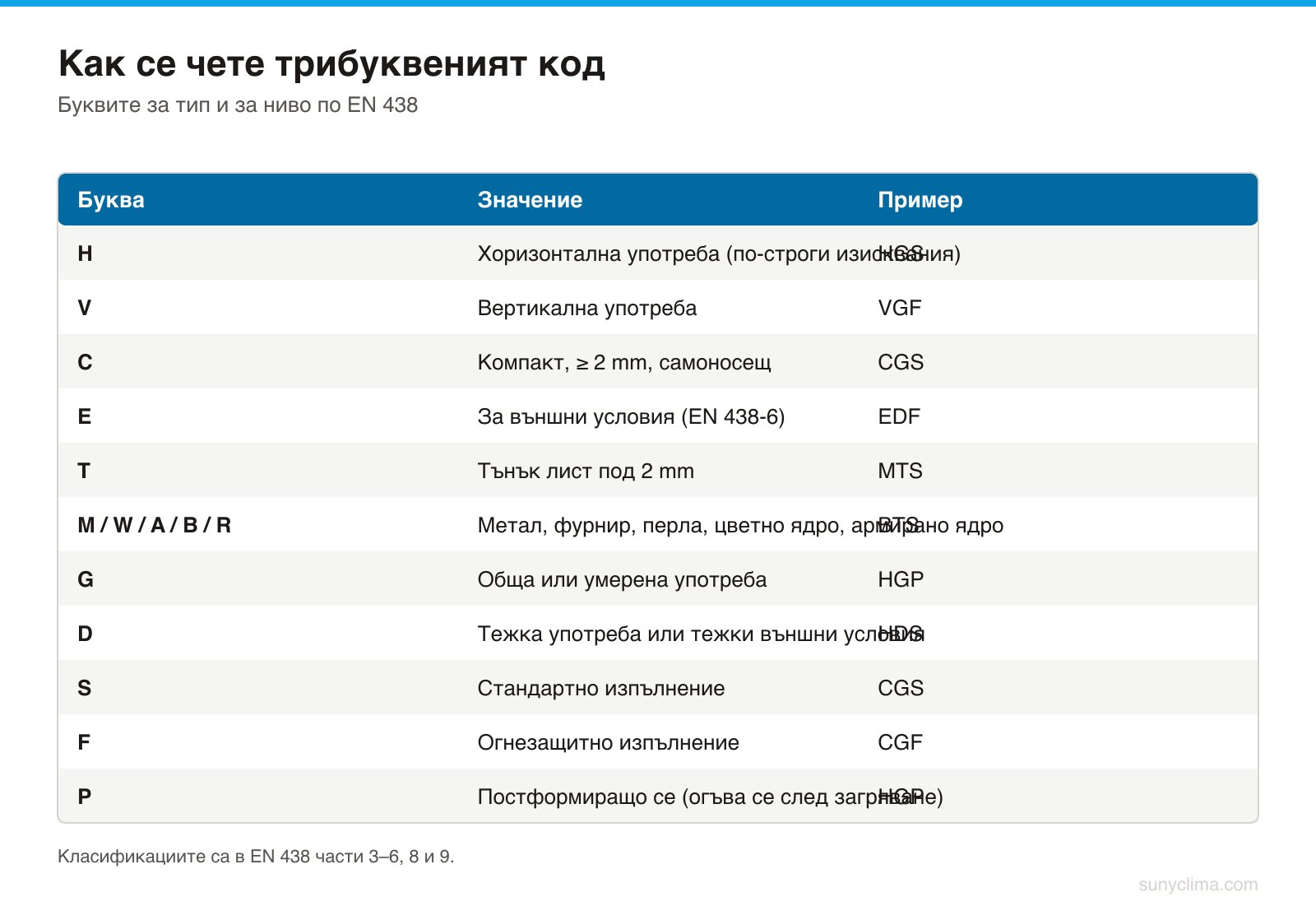
Shkronjat e para tregojnë tipin: H përdorim horizontal, V vertikal, C kompakt, E kushte të jashtme, T fletë e hollë nën 2 mm, plus M (metal), W (fanerë), A (perlë), B (bërthamë me ngjyrë), R (bërthamë e armuar) dhe AC (klasa e rezistencës ndaj fërkimit për dyshemetë). Shkronjat pasuese japin nivelin: G përdorim i moderuar, D i rëndë, S ekzekutim standard, F rezistent ndaj zjarrit, P i termoformueshëm.
Çifti më shpesh i keqinterpretuar është H dhe V. „Horizontal“ dhe „vertikal“ nuk përshkruajnë pozicionin e fletës, por nivelin e testimit — sipër sipërfaqeve horizontale fërkohet, pritet dhe lihen shenja. Sipas EN 438 rezistenca ndaj konsumimit deri te pika fillestare është ≥ 50 rrotullime për VGS/VGF/VGP, ≥ 150 për HGS/HGF/HGP dhe ≥ 350 për të përforcuarat HDS/HDF/HDP. E njëjta gjë vlen edhe te gërvishtjet: në sipërfaqe të lëmuara kërkesa është grada 1 për V, grada 2 për H dhe grada 3 për HD.
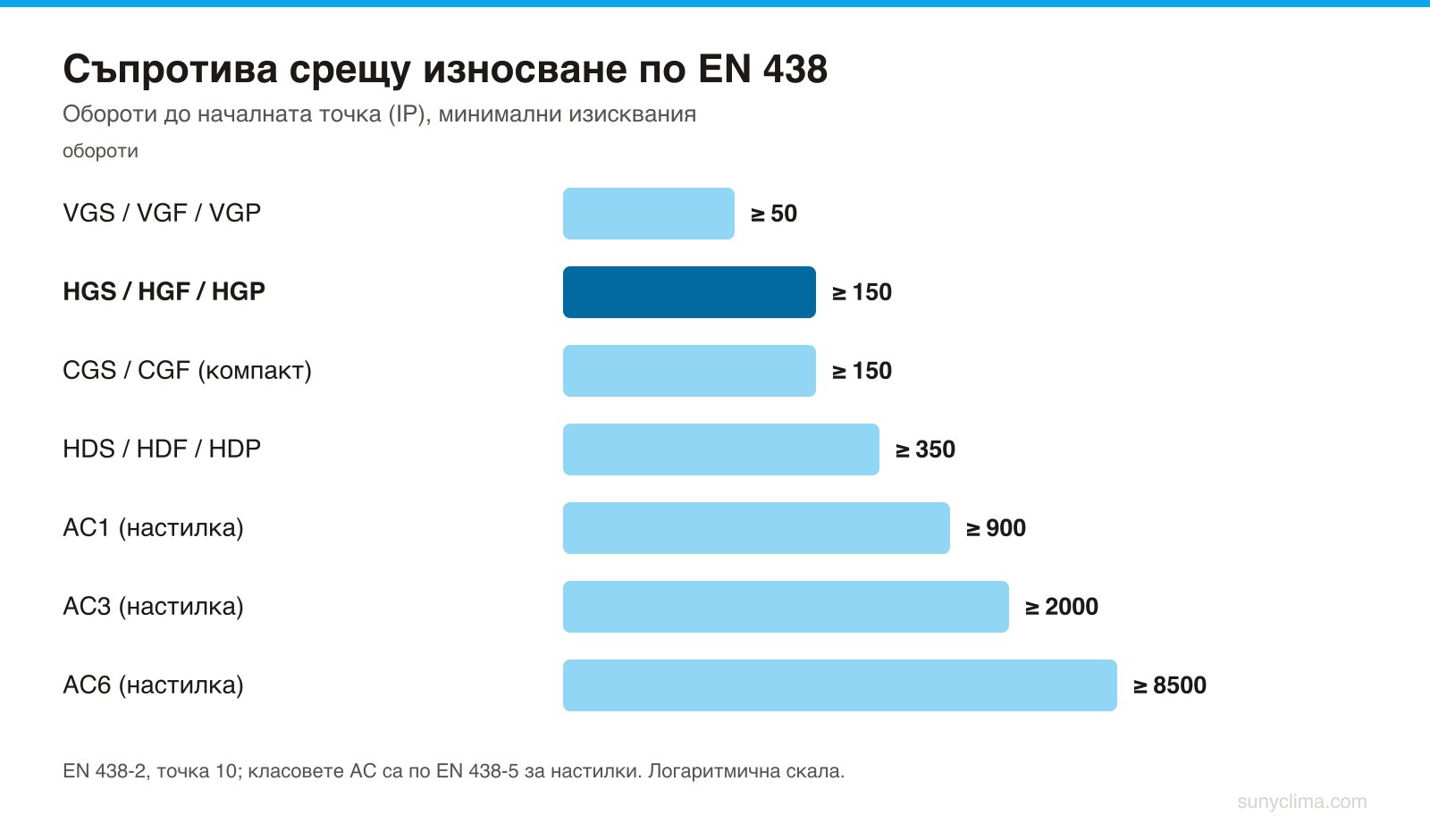
Për dyshemetë sipas EN 438-5 shkalla është tjetër: nga AC1 (≥ 900 rrotullime) deri te AC6 (≥ 8500). Nëse dikush ju ofron laminat muri për dysheme, ky është numri që mungon.
Kompakt apo laminat mbi bazë
Dy ekzekutimet nuk janë cilësi të ndryshme, por konstruksione të ndryshme.
Laminati për ngjitje është një fletë e hollë, zakonisht 0,5–1,9 mm, që vetvetiu nuk mban asgjë. Ngjitet mbi ПДЧ (MDF/ngjitëse druri), MDF, shtresëfletë (rimeso), metal, panel mineral ose hoje bletësh dhe së bashku me të formon një element kompozit.
Kompakti është një fletë e trashë — nga 2 deri në rreth 30 mm — te i cili i gjithë materiali është laminat: nuk ka bazë, nuk ka fugë ngjitëse, nuk ka bordurë veshjeje. Sipas udhëzimeve të sektorit bëhet vetëmbajtës nga 5–6 mm e sipër (burimet japin kufij pak të ndryshëm), nën 3 mm kërkon një bazë të fortë, ndërsa mbi 8 mm përballon sipërfaqe të mëdha horizontale me mbështetje të rralla.
Formatet janë të mëdha dhe kjo është pjesë e idesë — më pak të çara për sipërfaqe. Përmasat tipike të magazinës janë rreth 3070 × 1240 dhe 3050 × 1320 mm, me porosi deri në 4320 × 1660 mm. Toleranca në trashësi rritet me vetë trashësinë: ± 0,1 mm te fletët e holla, nga ± 0,2 mm te 2–3 mm deri në ± 1,3 mm mbi 25 mm te kompakti. Rrafshësia është 8 mm/m për 2–6 mm dhe 3 mm/m mbi 10 mm — pra një valëzim i lehtë në dritë anësore te një derë kompakte e gjatë mund të jetë plotësisht brenda standardit, jo defekt.
Balancimi: pse pllaka e veshur vetëm në njërën anë përkulet
Kjo është gabimi që përsëritet më shpesh dhe që shfaqet vetëm pas një jave.
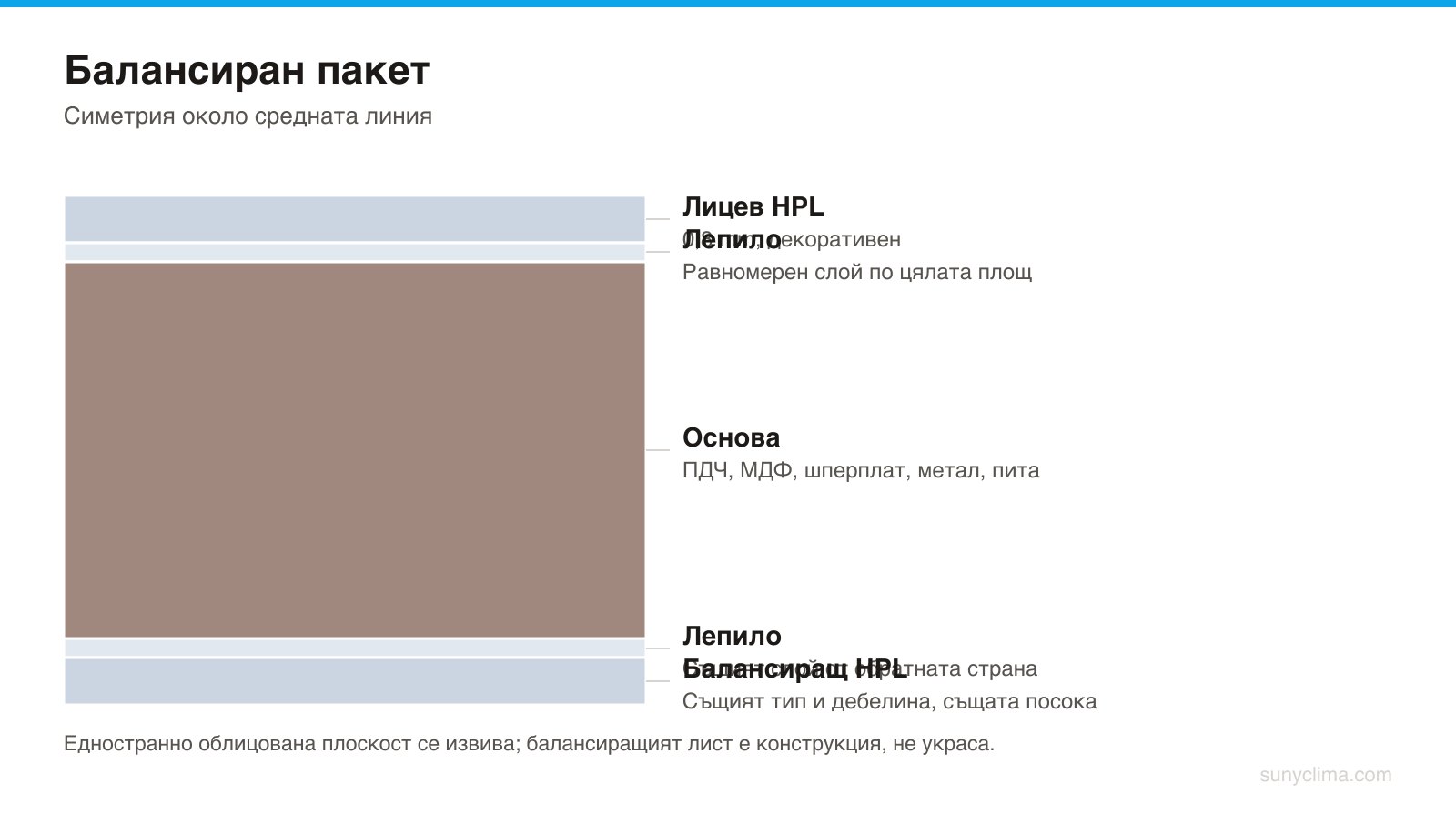
HPL-ja është një barrierë difuzioni: pas ngjitjes, ajo pengon bazën të thithë dhe të lëshojë lagështi nga ajo anë. Nëse veshni vetëm anën e përparme, ana e pasme vazhdon të "frymojë", të dyja anët lëvizin ndryshe dhe pllaka përkulet si një fletë bimetalike. Prandaj rregulli është simetria — në anën e kundërt ngjitet një laminat balancues i të njëjtit lloj, trashësie dhe drejtimi. Fleta balancuese nuk është zbukurim, është element konstruktiv.
E njëjta vlen edhe pa ngjitës. Kompakti kërkon të njëjtin klimë nga të dyja anët: te dyert e dhomave të zhveshjes dhe kabinave sanitare, ndryshimi i lagështisë dhe temperaturës mes dy faqeve është shkaku klasik i deformimit, prandaj edhe kërkesa për ajrosje. Ruhet horizontalisht, në 18–23 °C dhe 50–60% lagështi, ndërsa fletëmbrojtësja hiqet njëkohësisht nga të dyja anët. Nëse ka qëndruar gjatë e shtrembëruar, deformimi vështirë kthehet.
Postformingu dhe përkulja e ftohtë
Postformingu është një realizim i shënuar me P: HGP, VGP. Fleta ngrohet dhe përkulet rreth një skaji, në mënyrë që faqja të vazhdojë pa të çarë — kjo është skaji i përparmë i rrumbullakosur i planit të kuzhinës.
Temperaturat janë në një diapazon të ngushtë: 160–177 °C, më shpesh ≈163 °C, ndërsa mbi 190 °C laminati fryhet. Aftësia formuese testohet sipas EN 438-2, pikat 31 dhe 32: rrezja minimale për fletën 0,8 mm është ≥ 8 mm, por vetëm kur boshti i përkuljes është paralel me drejtimin e llustrimit. Tërthorazi rregulli është dyfish më strikt — ≥ 10 × trashësinë paralelisht, ≥ 20 × tërthorazi, pra 16 mm për të njëjtën fletë. Rezistenca ndaj fryerjes është një test tjetër (pikat 33 dhe 34) dhe burimet ndryshojnë: ≥ 15 s për të gjitha realizimet sipas disave, ≥ 10 s për ato postformuese sipas të tjerëve.
Përkulja e ftohtë është një çështje tjetër dhe rrezet janë me radhë madhësie më të mëdha: vlerat tipike nga fleta teknike janë rreth 10 cm për realizimet postformuese dhe rreth 20 cm për realizimet standarde dhe kundër zjarrit, konveks dhe konkav. Një HGS standard, i përkulur në rrezen e HGP-së, nuk përkulet — plasaritet.
Si sillet me kalimin e kohës
Matrica termoreaktive e ngurtësuar nuk shkrihet dhe nuk tretet; nga kjo rrjedhin edhe të gjitha vetitë e tjera:
- Uji dhe avulli. Materiali është jo-porous; testohet me ujë të valuar dhe avull uji sipas EN 438-2, ndërsa versionet për jashtë testohen edhe në kushte të lagështa.
- Nxehtësia. Testimi me nxehtësi të thatë kryhet në 160 °C (deri në 2016 — në 180 °C). Materiali nuk zbutet dhe nuk pikon.
- Zjarri. Kompakti standard CGS arrin klasën D-s2,d0 pa testim shtesë, por vetëm me densitet ≥ 1350 kg/m³ dhe trashësi ≥ 6 mm. Për versionet rezistente ndaj zjarrit nuk ka një shifër të vetme: haset B-s1,d0, B-s2,d0 dhe C-s2,d0 — klasa varet nga trashësia dhe nga baza, ndërsa kompakti i hollë rezistent ndaj zjarrit bie deri në klasën C. Kjo lexohet nga certifikata për montimin konkret, jo nga shkronja F. Nxehtësia e sipërme e djegies është 18–20 MJ/kg sipas EN ISO 1716: HPL-ja digjet, por nuk shkrihet dhe nuk pikon e ndezur.
- Lëvizja. Zgjerimi linear termik është 0,9 × 10⁻⁵ 1/K në gjatësi dhe 1,6 × 10⁻⁵ 1/K në gjerësi; stabiliteti dimensional në temperaturë të lartë është gjithashtu anizotropik — te grada tipike e hollë horizontale ≤ 0,55 % në gjatësi dhe ≤ 1,05 % në gjerësi. Rregulli për punishten: në drejtim tërthor fleta lëviz rreth dy herë më shumë.
- Dielli. Versionet për jashtë sipas EN 438-6 kalojnë testin e plakjes artificiale (EN 438-2, pika 29) — kontrast ≥ 3 sipas shkallës gri, pamje ≥ 4, shok klimatik dhe ruajtje e 80% të rezistencës dhe modulit të përkuljes. EGS/EGF janë për kushte të jashtme të moderuara, EDS/EDF — për kushte të rënda.
Jetëgjatësia e pritshme për përdorim të brendshëm është minimum 20 vjet pa humbje pamjeje. Jashtë, vitet e ekspozimit mund të ndryshojnë pamjen e sipërfaqes, pa cenuar përshtatshmërinë e saj për përdorim. Vlerat e HPL-së krahasuar me materialet e tjera gjenden në fletën teknike të referencës.
Në punishte: avancimi, këndet dhe fiksimi
Fakti që me densitet mbi 1,35 g/cm³ materiali "ha" mjetin e prerjes, është i njohur dhe i përshkruar në artikullin për panelin HPL. Më të dobishme janë shifrat konkrete me të cilat punohet në praktikë.
- Prerja. Mjete me pllakëza karbure ose diamanti, me avancim më të ulët se te pllakat kompozite — 0,03–0,05 mm për dhëmb. Çarja në pjesën e poshtme kontrollohet me këndin e daljes, me pllakë mbështetëse ose, më mirë, me pre-prerje.
- Frezimi i skajeve. Hiqen së paku 2 mm dhe jo më shumë se 5 mm për çdo kalim. Gjurmët e frezës hiqen me poliranim dhe llustrim, ndërsa skaji mund të trajtohet me vaj silikoni pa aditivë për mobilje. Këndet e lira duhet domosdoshmërisht të rrumbullakosen.
- Shpimi. Përdoren burgji për plastikë me kënd maje 60–80° në vend të 120°, për vrima që kalojnë tejpërtej — 50–60°, me uljen e avancimit pranë daljes. Në vrimat e verbra duhet të mbetet së paku 1,5 mm material, ndërsa te vrimat paralele me sipërfaqen e panelit — së paku 3 mm.
- Fiksimi. Vrimat kaluese duhet të jenë 2–3 mm më të mëdha se elementi fiksues, ose përdoren bushone elastike poliamidi; një pikë mbahet fikse, të tjerat lëshohen të rrëshqasin. Filetimet mund të bëhen, por shpimi paraprak është i detyrueshëm.
- Montimi. Lidhja gjuhë-brazdë përdoret vetëm te fletët nga 10 mm e lart, me gjerësi të brazdës dhe trashësi mureve së paku 3 mm dhe thellësi deri në 10 mm. Kur ngjiten, fletët bashkohen vetëm në të njëjtin drejtim të fibrave.
- Pluhuri. Aspirimi është i detyrueshëm, pa mbinxehje lokale.
Një fjali për klientin: qoshet e rrumbullakosura të prerjeve dhe skaji i lustruar nuk janë vetëm estetikë. Qoshja e mprehtë e brendshme është përqendrues tensioni dhe pikërisht prej andej niset çarja pas vitit të parë.
Pastrimi dhe riparimi
Përditshmëria është e thjeshtë, gjë që është shenjë e mirë: ujë dhe leckë e butë, nëse duhet edhe detergjent pa abraziv, pastaj shpëlarje dhe tharje. Sfungjerët abrazivë nuk e korrodojnë, por e gërvishtin sipërfaqen melaminike — dhe sipërfaqja e gërvishtur është edhe më pak rezistente ndaj kimikateve, edhe pistohet më lehtë. Duhet shmangur edhe kontakti i zgjatur me detergjentë acidikë për banjo, furra dhe metal; metodat konkrete sipas llojit të njollave gjenden në seksionin mirëmbajtje.
Kufiri i riparimit duhet thënë sinqerisht: një gërvishtje e thellë nuk "arnohet", sepse materiali termoreaktiv nuk shpërbëhet mbrapsht, ndërsa ngjitësit dhe llakët dykomponentë nuk hiqen pasi janë forcuar. Skaji kompakt mund të hiqet dhe lustrohet përsëri; sipërfaqja jo, prandaj në atë rast zëvendësohet elementi.
Ku përdoret — përveç në dyer
Gama e gjerë e përdorimeve e bën HPL-në interesante, sepse secili prej tyre vendos një kërkesë që dera nuk e vendos:
- Sipërfaqe kuzhine dhe pune — skaji i termoformuar është arsyeja pse ekziston klasa P.
- Tavolina laboratorike — për shkak të rezistencës kimike dhe versioneve të veçanta laboratorike të kompaktit.
- Kabina sanitare, dollapë dhe zhveshtore — kompakt pa fugë ngjitëse, që përballon lagështi të vazhdueshme dhe larje me presion.
- Veshje mureve dhe tavaneve — sipas EN 438-7; në spitale fuga mbushet për të qenë higjienike.
- Fasada dhe ballkone — kompakt i jashtëm sipas EN 438-6, në strukturë të ventiluar dhe me lëvizje të siguruar.
- Dysheme — EN 438-5, klasat AC1–AC6.
- Transport — interiere trenash sipas EN 45545-2, anije sipas IMO FTP Code, autobusë sipas ECE R 118.
- Mjedise ushqimore — i përshtatshëm për kontakt me ushqimin sipas rregulloreve (KE) 1935/2004 dhe (BE) 10/2011; EN 13130-1 është metoda e testeve të migrimit, të cilën një pjesë e prodhuesve e shënojnë në fletët teknike. Sipërfaqja dhe skajet dezinfektohen.
- Mobilim urban dhe tabela — stola, ndalesa, kënde lodrash, tabela informative.
Dhe, sigurisht, dyer dhe panele — të njëjtat rregulla, në sipërfaqe më të vogël. Panelet për dyer hyrëse prodhohen me porosi në Bullgari, sipas madhësisë së saktë të derës konkrete — pikërisht për këtë arsye ia vlen të lexohet kodi i modelit para porosisë. Shikoni materialet dhe katalogun.
Si lexohet fleta teknike
- Cila pjesë e EN 438 është deklaruar — 3 (i hollë për ngjitje), 4 (kompakt për brendësi), 5 (dysheme), 6 (kompakt për jashtë), 8 ose 9.
- Kodi me tre shkronja — gjysma e përgjigjes — dhe nëse trashësia në fletë i referohet laminatit apo kompozitit të gatshëm me bazën.
- Rezistenca ndaj konsumimit (IP) në rrotullime dhe shkalla ndaj gërvishtjes.
- Klasifikimi zjarrfikës sipas EN 13501-1 — varet nga trashësia dhe nga certifikata konkrete, jo vetëm nga shkronja.
- Stabiliteti dimensional dhe zgjerimi — gjatësor dhe tërthor veç e veç; një shifër e vetme do të thotë që tjetra mungon.
- Për versionet e jashtme — plakja artificiale dhe shoku klimatik, dhe nëse niveli është për kushte të moderuara (EGS/EGF) apo të rënda (EDS/EDF).
Tri keqkuptime që kushtojnë më shtrenjtë
„HPL është HPL“ — VGS për mur dhe EDF për fasadë janë në pjesë të ndryshme të standardit. „Do ta lakojmë në vend“ — vetëm ekzekutimi P dhe vetëm me nxehje. „Nga pas nuk shihet“ — shihet, pas një jave, në lakimin e panelit.
Po zgjidhni material për një derë konkrete? Nisuni nga udhëzuesi për zgjedhjen e panelit; për përmasa jostandarde — nga porositë sipas masës.
Shkurtimisht: HPL është letër dhe rrëshira termoreaktive, të presuara në ≥ 120 °C dhe ≥ 5 MPa deri në densitet mbi 1,35 g/cm³ — material i përcaktuar nga vetë procesi. EN 438 e përshkruan në nëntë pjesë, ndërsa kodi trishkronjor thotë pjesën tjetër: H/V/C/E për tipin, G/D për nivelin, S/P/F për ekzekutimin. Fletët e holla ngjiten dhe patjetër balancohen nga pas; kompakti është vetëmbajtës nga rreth 5–6 mm e lart. Lakohet vetëm ekzekutimi P. Në drejtim tërthor materiali lëviz dyfish më shumë se në drejtim gjatësor — lërini hapësirë të mjaftueshme.