Skla pro panely vchodových dveří: mat, Delta 2, Stopsol
Matné, bílé lakované, Delta 2 a Stopsol — jak vypadá zvenku každý typ skla u panelu vchodových dveří a proč je kalení nezbytné.
Matné, bílé (lakované), Delta a Stopsol — jak to skutečně vypadá zvenku u každého z nich, které jsou vhodné pro venkovní použití a proč musí být sklo ve křídle vchodových dveří vždy tvrzené.
Sklo je jediný prvek dekoračního panelu, který zároveň propouští světlo, chrání soukromí domácnosti před pohledy zvenčí a musí odolat nárazu. Proto se vybírá podle jiné logiky než sklo do okna: tam je rozhodující tepelná izolace, tady rozhodují viditelnost, směr světla a bezpečnost — přesně v tomto pořadí.
Proč se sklo do vchodových dveří vybírá podle jiných pravidel
Vchodové dveře stojí na hranici mezi ulicí a předsíní. Přes den je světlo venku, večer naopak uvnitř — a stejné sklo se v obou situacích chová jinak. Přidejte k tomu, že křídlo se zabouchává, že do něj narážejí kočárky, tašky i děti, a že sklo v předsíni je často přesně ve výšce očí. Okno takový život prožívá jen zřídka.
Existuje i třetí rozdíl, který zná každý zkušený montér: sklo v panelu vchodových dveří téměř nikdy není obyčejný obdélník. Řeže se na míru podle tvaru, hrany se brousí, někdy se vrtá otvor pro kliku nebo dekorativní kování — a to vše musí proběhnout v přesně daném pořadí, o kterém bude řeč dále.
Z tepelně-technického hlediska samotné sklo izolantem není. Tepelná vodivost float skla je přibližně 0,9–1,0 W/(m·K) — desítky násobně více než izolační jádro panelu. Proto se sklo posuzuje jako funkční otvor: izolaci zajišťuje samotný izolační sklopakket a plná část kolem něj, nikoli povrch skla. Pokud chcete srovnat konkrétní hodnoty jednotlivých materiálů, podívejte se na technické parametry materiálů pro panely.
Matné sklo: kyselinové leptání vs. pískování
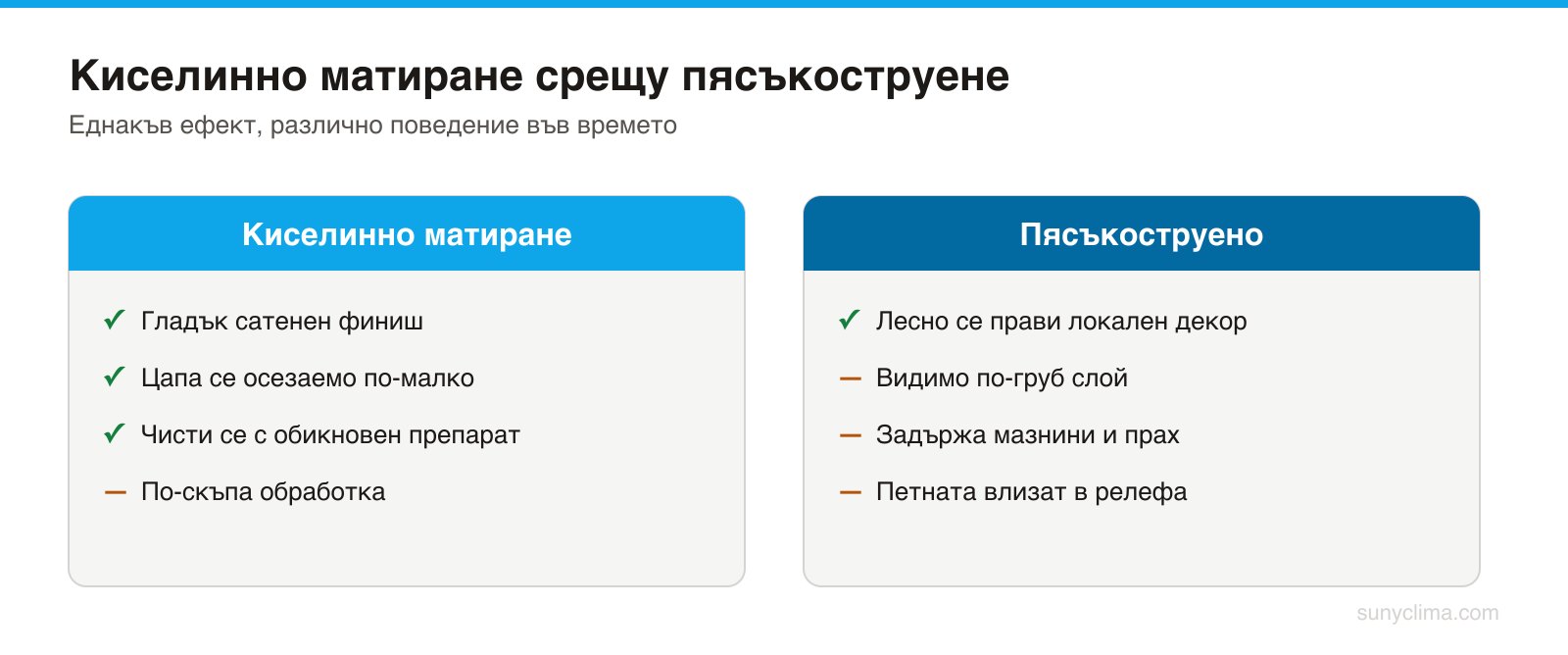
Matné sklo je nejžádanějším řešením pro vchodové dveře, a je to logické: dává měkké, rozptýlené světlo do předsíně a zamezuje jasnému obrazu zvenčí. „Matné“ ale popisuje pouze výsledek, ne technologii — a technologie jsou dvě a v čase se chovají zcela odlišně.
Kyselinové leptání rozpouští povrch chemicky a zanechává hladký saténový vzhled. Na dotek je sametové, ne drsné. Pískování mechanicky vytváří mikrokrátery ve skle a zanechává viditelně hrubší povrch.
Praktický rozdíl spočívá v údržbě. Drsný pískovaný povrch zachytává mastnotu, prach a otisky prstů a časem se skvrny obtížně odstraňují, protože pronikly do struktury povrchu. Kyselinově leptaný povrch se špiní znatelně méně a čistí se běžným čisticím prostředkem. U dveří, kterých se denně dotýkají ruce přímo v okolí skla, to není zanedbatelný detail — podívejte se i na doporučení pro údržbu.
Bílé (lakované) sklo — sytá barva a jedno důležité omezení
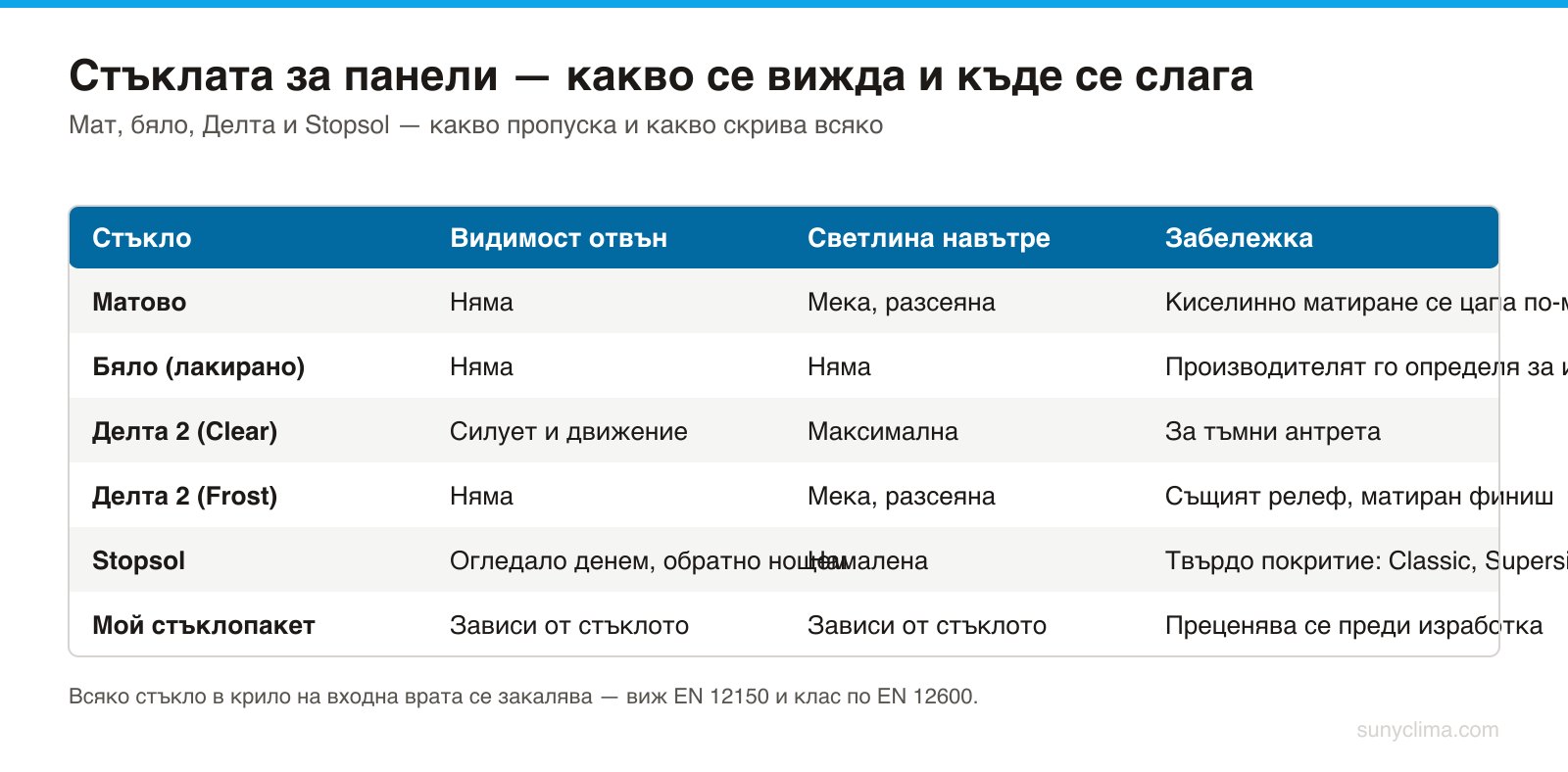
Bílé sklo není matované ani natřené zvrchu. Jde o float sklo, na jehož zadní straně je nanesena barva. Při pohledu zepředu, skrz sklo, působí barva hluboce a rovnoměrně, s oním mokrým leskem, kterého žádný laminovaný povrch nedosáhne. Nulová průhlednost, maximální kontrast s kováním – proto se tak oblíbilo u moderních panelů s nerezovými (inox) aplikacemi.
Tady ale přichází výhrada, kterou by měl montážník znát a sdělit zákazníkovi: standardní produkt tohoto typu je určen pro interiérové použití. Takto jej definuje i specifikace výrobce pro lakovaná skla typu Lacobel – float sklo s barvou na jedné straně, určené pro použití v interiéru. Důvodem je, že barva je na vnitřní straně a sklo ji chrání jen do té míry, do jaké se přes okraj a zadní stranu nedostane vlhkost a UV záření.
To neznamená, že bílé sklo nemůže být součástí vchodových dveří. Znamená to, že musí být osazeno tak, aby natřená strana směřovala dovnitř konstrukce, chráněná před vlhkostí jak po okraji, tak i zezadu. V praxi to znamená: bílé sklo na vnitřní straně izolačního skla nebo za plnou vrstvou panelu – nikoli jako vnější líc, který na sebe bere déšť a slunce. Pokud jsou dveře na otevřené schodišťové ploše, na jižní straně, bez stříšky – o tom je potřeba mluvit před objednávkou, ne až po prvním roce. U nestandardních situací se podívejte na zakázkovou výrobu na míru.
Delta 2 a figurální skla – světlo bez průhlednosti
Figurální sklo se vyrábí válcováním s reliéfem. Reliéf Delta je jedním z klasických vzorů: geometrický, klidný, bez „retro“ nádechu, a stejně dobře funguje v klasickém i moderním panelu. Existuje ve dvou hlavních variantách, které se často zaměňují:
- Delta Clear – průhledný základ s reliéfem. Umožňuje částečnou průhlednost: rozpoznáte siluetu a pohyb, ale ne detaily.
- Delta Frost – stejný reliéf na matovaném povrchu. Zcela skrývá výhled.
Volba mezi oběma je čistě praktická otázka: chcete vidět, že před dveřmi někdo stojí, nebo dáváte přednost úplné neprůhlednosti. U vchodových dveří do společné chodby bývá varianta Frost obvykle klidnějším řešením; u dveří na vlastní dvorek dává Clear větší propojení s venkovním prostorem. Jak vypadají na skutečném panelu, si můžete prohlédnout v katalogu.
Stopsol – zrcadlový efekt a denní cyklus
Stopsol je reflexní sklo s pyrolytickým (tvrdým) povlakem, nanášeným už v horké lince výroby. Důležitým důsledkem tvrdosti povlaku je jeho odolnost proti poškrábání a schopnost snést další zpracování – lze jej použít jako jednoduché, laminované či ohýbané sklo, stejně tak v izolačním skle, a dokonce jej lze smaltovat a sítotiskem potiskovat. Měkké povlaky takové zacházení nevydrží.
Nabízí se ve třech základních variantách: Classic s jantarovým odstínem, Supersilver se stříbrným zrcadlovým vzhledem a SilverLight se slabší odrazivostí pro diskrétnější efekt.
A tady je to, co se nejčastěji přehlíží: zrcadlový efekt funguje ze světlejší strany. Přes den, když je venku světleji, sklo odráží a zvenku je vidět zrcadlo — přesně to, co chcete. Večer, když v předsíni svítí světlo a venku je tma, směr se obrátí: zvenku začne být vidět dovnitř a zevnitř se sklo promění v zrcadlo. Pokud dveře směřují do ulice a v předsíni svítí do pozdních hodin, je třeba to vzít v úvahu předem. Kombinace Stopsol plus matné sklo v izolačním skle tento problém vyřeší, aniž by se ztratil vzhled.
Bezpečnost: EN 12150 a EN 12600 nejsou totéž
Tyto dvě normy se v nabídkách a rozhovorech neustále zaměňují, přitom popisují odlišné věci.
EN 12150 popisuje tepelně tvrzené sklo — samotný produkt a proces. Tvrzené sklo je výrazně odolnější vůči nárazu a ohybu než obyčejné sklo a při rozbití se rozpadá na drobné tupé střepy místo ostrých řezavých úlomků. To je vlastnost, která zachraňuje ruce a obličeje.
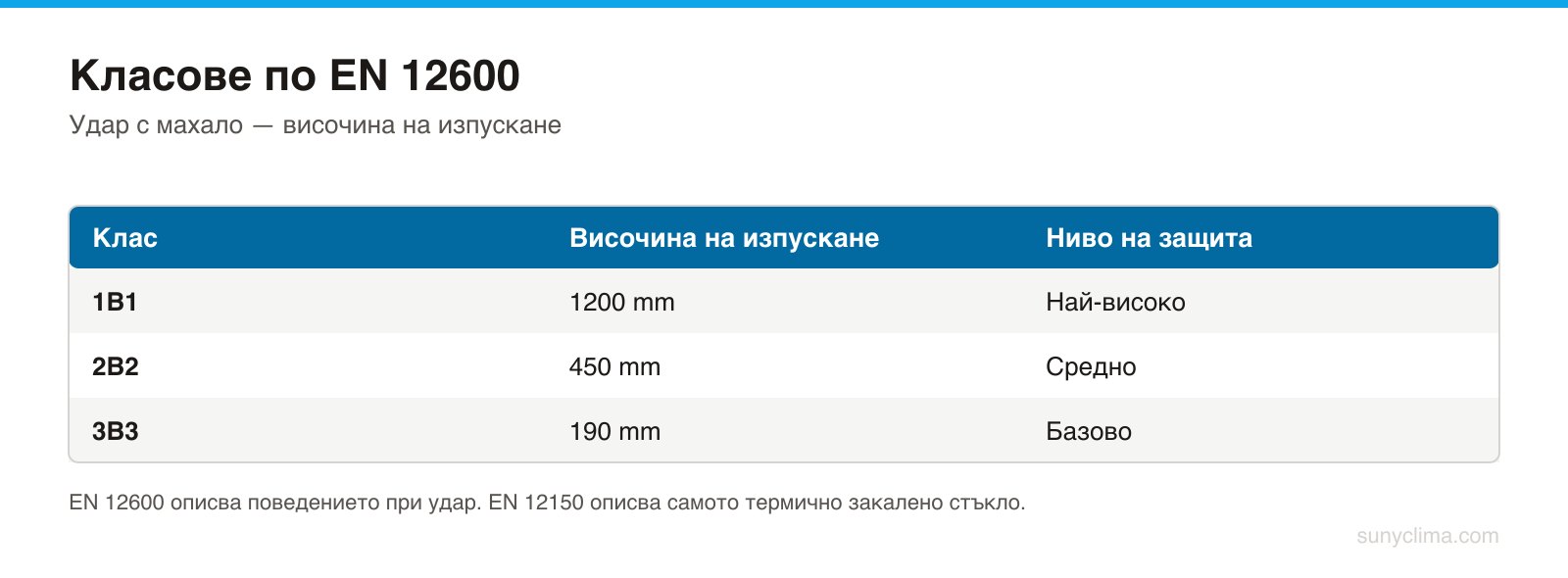
EN 12600 popisuje chování při nárazu měkkým těžkým předmětem — tedy co se stane, když člověk spadne na sklo. Zkouška se provádí pomocí kyvadla spuštěného z určité výšky a jednotlivé třídy odpovídají výšce spuštění:
Proč na tom u vstupních dveří záleží: zasklení v křídle dveří je kritická zóna. Do kritické zóny spadá sklo ve dveřích do 1,5 m od hotové podlahy, stejně jako boční zasklené panely ve vzdálenosti méně než 300 mm od hrany dveří. To znamená, že téměř každé sklo v panelu vstupních dveří a téměř každý boční panel vedle nich se v kritické zóně nachází z definice. Proto zde tvrzené sklo není žádná nadstandardní volba, ale základní požadavek.
Stručně pro montážníka: EN 12150 vám říká, že sklo je tvrzené (temperované). EN 12600 vám říká, jak silný náraz vydrží a v jaké třídě — 1B1, 2B2 nebo 3B3. Zákazník má právo vidět obě normy a vy máte zájem na tom, aby byly zapsány v objednávce.
Jak se sklo zpracovává: pořadí operací je závazné
Existuje jedno technologické pravidlo, jehož porušení je nákladné a nevratné: tvrzené sklo se po tvrzení dále neopracovává. Všechny otvory, výřezy a úpravy hrany se provádějí ještě před vstupem do pece. Pokus o vrtání nebo dořezání již tvrzeného skla ho na místě rozbije — nejde o „naštípnutí“, ale o rozpad na kusy.
Skutečné pořadí je následující:
- Řezání na rozměr a tvar — včetně oblouků, oválů a výřezů pro kování.
- Opracování hrany — broušení nebo leštění; hrana musí být čistá, protože mikroprasklinky v ní jsou výchozím bodem každého prasknutí.
- Otvory a výřezy — pro kliku, kukátko, aplikace. Otvory se umisťují v dostatečné vzdálenosti od hrany.
- Tvrzení (temperování) — sklo se řízeně zahřívá a chladí. Od tohoto okamžiku je rozměr konečný.
- Kompletace — do izolačního skla nebo přímo do panelu.
Důsledek pro objednávku je jednoduchý: rozměry a pozice otvorů se fixují na začátku, ne za pochodu. Proto dobře nadimenzovaný panel začíná přesným rozměrem otvoru dveří — jednotlivé kroky jsou popsány v jak vybrat panel.
Vlastní izolační sklo
Pokud už máte izolační sklo, které chcete zachovat — vitráž ze starých dveří, atypické sklo podle návrhu architekta nebo sklo, které jste si objednali samostatně — může být zabudováno do panelu, pokud splňuje požadavky na rozměr a tloušťku. Praktická podmínka je jedna: sklo se posuzuje před výrobou, ne po ní. Jeho tloušťka určuje falc a falc určuje celý panel.
Ať už jste zvolili jakékoli sklo, sdělte to před objednáním panelu. Sklo je jediný prvek, který neodpouští změnu rozhodnutí — po zakalení se už neřeže.
Jaké sklo pro jakou orientaci
- Severní orientace, tmavá vstupní hala — Delta Clear nebo lehké matování. Cílem je vpustit maximum světla, přičemž viditelnost zvenčí je stejně omezena rozdílem v osvětlení.
- Jižní a západní orientace, silné slunce — Stopsol. Odráží část sluneční energie a snižuje přehřívání a oslnění ve vstupní hale.
- Dveře do ulice nebo do společného vchodu — matné sklo nebo Delta Frost. Plná neprůhlednost bez ztráty světla.
- Moderní panel s nerezovými (inox) aplikacemi — bílé sklo, při dodržení podmínek pro ochranu lakované strany.
- Otevřená plocha bez stříšky, jižní orientace — nepoužívejte lakované sklo jako vnější líc; zvolte matné, vzorované nebo Stopsol.
Panely se vyrábí na zakázku v Bulharsku, což v praxi znamená, že sklo a typ opracování se stanovují přímo pro konkrétní dveře, a nevybírají se z hotového seznamu dvou tří rozměrů. Pokud jste se ještě nerozhodli, jaký má být samotný panel, začněte průvodcem dekorativními panely, a co se týče nosného podkladu pod sklem — co je to HPL panel.
Tři věci k zapamatování: kyselinově leptané sklo zůstává čisté déle než pískované; bílé lakované sklo je výrobcem určeno do interiéru a vyžaduje chráněné umístění; a sklo ve křídle vchodových dveří je v kritické zóně a musí být tvrzené, s jasně určenou třídou podle EN 12600.